The things we keep, polish and leave behind
“Perhaps our most important possessions are not the things that others must find space for after we die. It is the things they have already absorbed from us while we are alive.”
Over the past few weeks, I have been packing up my mother's life. Cupboard by cupboard, shelf by shelf, room by room, everything had to sorted. Decision had to be made on what to keep, sell, donate or discard.
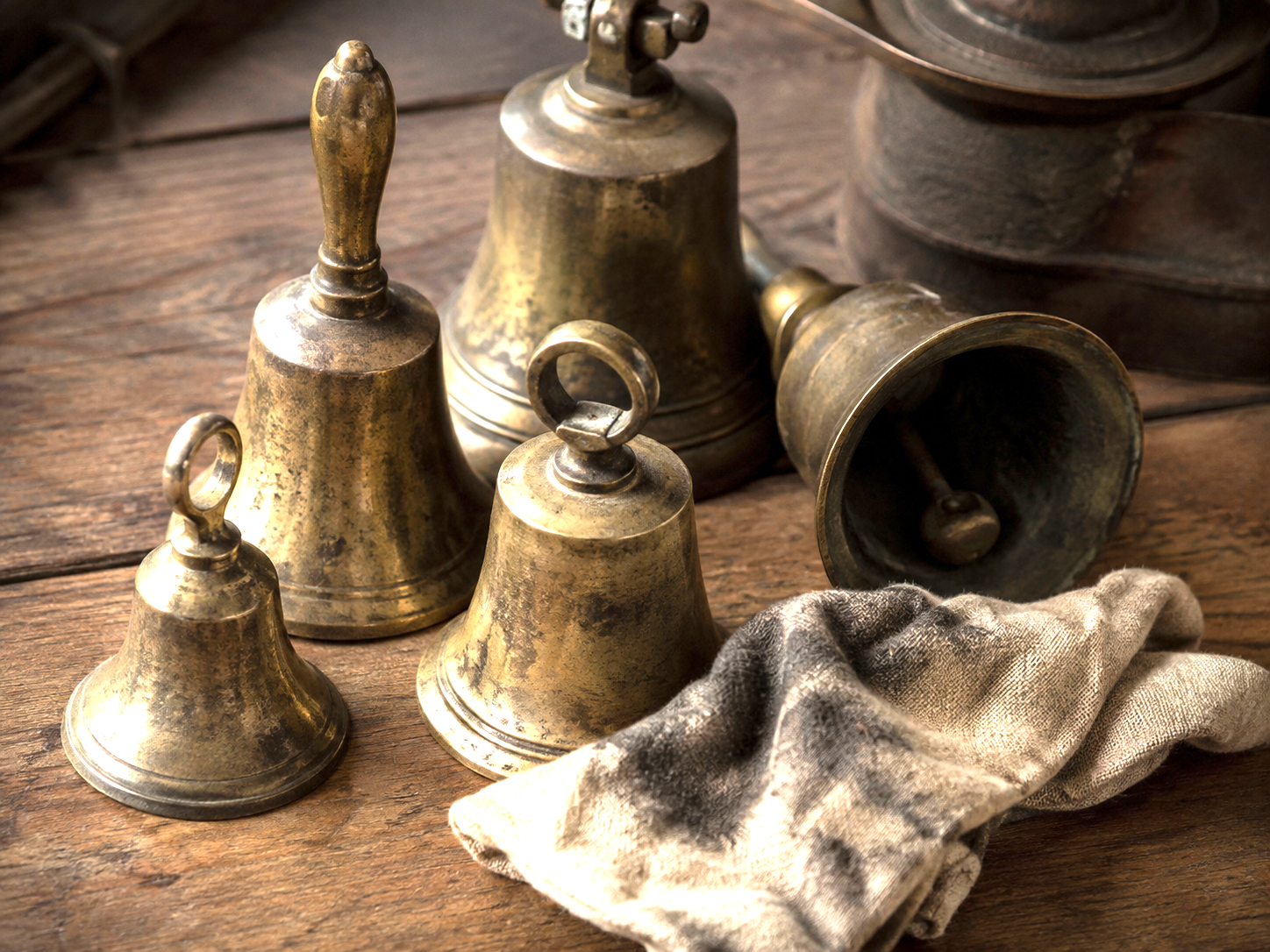
My mother was a collector of many things. Mountains of quilting fabric, books, brass bells and ornaments. Beautiful and curious things. Things acquired on travels, collected for their future usefulness and items clearly with a story to tell.
So many objects that had once been carefully chosen, bought, carried home, thoughtfully displayed, dusted and cared for, occupying a small portion of a life. And now someone had to decide what happened to it. It was physically exhausting. But the emotional work was much harder. Because I wasn't simply sorting things, I was sorting pieces of a life.
When life’s treasures leave on the back of a bakkie
Watching boxes disappearing in boots and furniture piled on the back of a bakkie, I had a rather sobering thought: Is this what our accumulated earthly treasure eventually becomes? Bits and pieces gifted, sold or donated either to family or strangers. Some items simply discarded.
There was something both sad and strangely clarifying about it. We spend decades assigning value to things, working hard, saving money, sourcing and collecting items to display and protect. The value we assign to these objects are deeply personal. Something my mother treasured may have no meaning to me or an expensive item may leave me unmoved, while a small object of little monetary value may be the treasure I cannot part with.
Psychologist and consumer researcher Russell Belk described possessions as part of our 'extended self' where objects can become intertwined with identity, memory and the story we tell about who we are. Perhaps that is why sorting the possessions of someone we have loved is so difficult. You are not simply asking: “Do I want this object?” But rather “What part of her does this hold? Will I lose something if I let it go? Am I the custodian of this now, the one to carry this forward?”
WATCH: How to manage grief
Legacy is not an inventory
Somewhere among all those boxes, I realised that a legacy cannot be measured by the number of things we leave behind. Because the next generation will inevitably edit our collections. We cannot expect our children to want the furniture, read the books, love the porcelain, paintings, crystal glasses or carefully collected bells that delighted us. That does not mean those things were meaningless. They gave pleasure during the life in which they belonged. But perhaps we make a mistake when we assume that what has value to us must retain exactly the same value for those who come after us.
Legacy is something different. Legacy is what has entered other people deeply enough that they carry it without being asked. A phrase or recipe, the way people are welcomed into a home, a standard of excellence and value system, sense of humour, pieces of wisdom repeated so many times over the years that they eventually feel like your own.
Perhaps our most important possessions are not the things that others must find space for after we die. It is the things they have already absorbed from us while we are alive.
READ: Stress is contagious but so is calm
It made me think of the stress footprint that I have been writing about – the footprint we leave in others through our tone, expectations, urgency, unpredictability, kindness, calm, respect and behaviour. Perhaps that is our greatest legacy. Long after somebody has emptied our cupboards, what state will people remember experiencing around us? What did we make heavier or lighter? What have we left in people rather than merely leaving an object?
Then I found the brass
Among the many things I chose to keep were a few brass pieces, mostly bells. They did not look particularly impressive with their dark and dull complexion from age. Displayed next to newer items, they looked rather insignificant. But I was drawn to them and decided to give them a clean which took far more effort than I had anticipated, leaving my hands black and my clothing dirty.
But underneath all that tarnish I uncovered the warm, glowing brass. The bells were beautiful. They had always been beautiful even though I could not see that immediately beyond the dirt. And perhaps that was the second lesson my mother's belongings left me: not everything worthwhile looks valuable before we put some work into it.
We live in a world that often celebrates the acquisition of new things, upgrades, achievements and opportunities. Sometimes, however, we don't need another thing. We need to care for what we already have. Sometimes something is not worthless, it is simply bruised. It could be a relationship, a skill we have neglected, our physical health, our creative side or our home. Perhaps even our own capacity for joy.
Sometimes the answer is not replacement but rather the need for some elbow grease to actively practice:
Attention.
Time.
Patience.
Repetition.
Care.
Grief has its own elbow grease
There is nothing efficient about dismantling the home of someone you love. You pick up an object and a memory arrives unexpectedly. You cry over something ridiculous. You feel almost nothing about something you thought would matter. You become irritated by the sheer volume of decisions. You feel guilty for throwing something away. Then guilty for keeping too much. You are tired and overwhelmed and yet there are more cupboards waiting to be cleared.
Bereavement researchers Margaret Stroebe and Henk Schut describe grieving as an oscillation between loss-oriented and restoration-oriented coping. At times we turn towards the loss: remembering, longing, crying, confronting what has changed. At other times we turn towards the practical task of rebuilding life: paperwork, decisions, new routines, changed roles and all the ordinary things that still have to be done.
Packing up a house has felt like both at the same time. One moment I was mourning my mother. The next I was negotiating the price of a bookshelf. Perhaps that strange movement is part of grief. Not moving on, but moving between remembering and doing, between holding on and letting go, between tears and Brasso, and between what was and what still has to become.
Meaning-making is an important part of adapting after bereavement. Gillies and Neimeyer describe grief not simply as recovery from an emotional wound, but as the work of reconstructing meaning when the world we understood has been altered. And that resonates with me. I cannot make my mother's death meaningful; I would not try. But I can allow what I am experiencing because of her death to make me notice meaning more carefully.
Hardship does not automatically beautify us
I am cautious of the idea that every difficult experience must make us stronger. Sometimes hardships simply hurt. It exhausts us, leaves us damaged that takes a long time to repair. We do not need to turn every loss into a lesson in order to justify it. However, hardship can expose things, strip away assumptions, force us to examine what we are carrying, and sometimes, if we are willing to do the difficult work, it can clarify what is worth keeping.
Positive and negative emotions do not have to be mutually exclusive during intensely stressful periods. Meaning, gratitude, moments of pleasure and reordered priorities can exist alongside sadness and distress. This resonates better with my experience than a neat story of “growth after grief”. I am still grieving. And the bells are beautiful. Both things are true.
Our lives need sorting and polishing too
As I looked at the final collection of things I had chosen to keep, I realised that I had been doing something more than clearing a house. I had been curating - not everything needed to come with me, but some things did. Perhaps from time to time, we need to do the same with our lives: not only with our possessions, but with our stress footprint.
We accumulate more than objects. We accumulate expectations, obligations, habits, roles, old resentments, definitions of success, other people’s opinions, commitments (that once made sense but no longer do), standards we inherited without ever deciding whether we believe them. Perhaps periodically we need to place these things, metaphorically, on the floor in front of us and ask: What do I want to keep? What am I carrying only because somebody else once valued it? What can I release? And what looks tarnished, but is actually precious enough to deserve some elbow grease?
What will fit into the boot?
One day, all our carefully accumulated belongings will belong to somebody else's decision-making process. It is a sobering thought but perhaps also a liberating one. It asks us to reconsider what we are spending our lives accumulating on. More things? More achievements? More proof that we mattered? Or relationships, memories, values and ways of being that will already have taken root in other people.
In my home are my mother’s small brass bells. They will never represent the whole of her life but they don’t need to. I also know what they looked like when I found them - and I know how much work it took to make them shine again. Some things only reveal their beauty when we are willing to do the work of caring for them. Including, perhaps, our lives.